Last updated: May 2026 | Reviewed quarterly
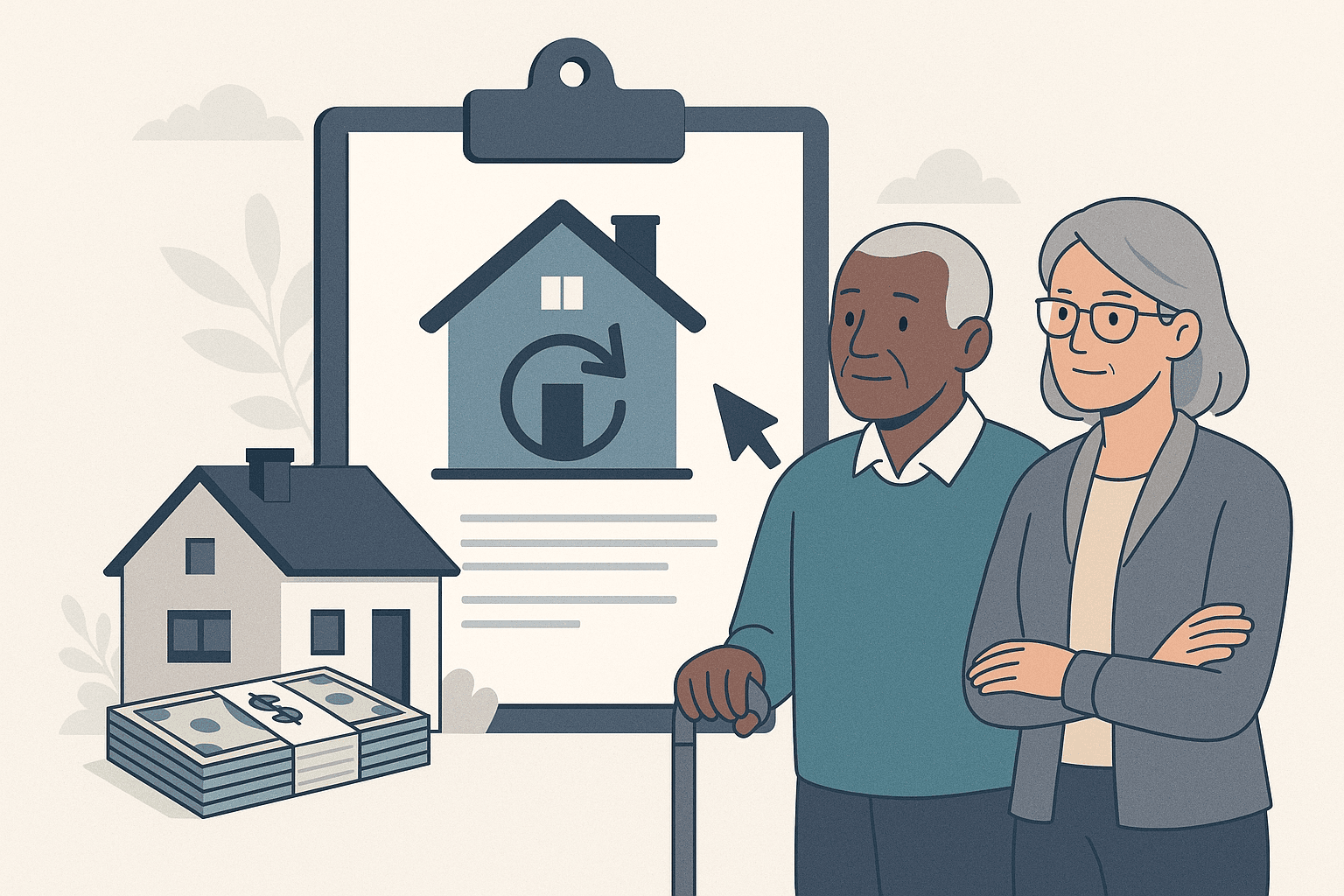
A reverse mortgage lets homeowners age 62 and older convert a portion of their home equity into tax-free cash — without selling their home or making monthly mortgage payments. The loan comes due only when you sell, move out permanently, or pass away.
Quick answer: A reverse mortgage is not free money, and it's not right for everyone. But for homeowners who are equity-rich and cash-poor, it can meaningfully improve retirement income security without requiring a move. The most important thing to understand: the loan balance grows over time, and it will reduce what you leave to heirs.
The 8 Things Everyone Should Understand Before Getting a Reverse Mortgage
1. What a Reverse Mortgage Actually Is
A reverse mortgage is a loan secured by your home that requires no monthly payments. Instead, interest and fees accrue on the balance, and the full amount is due when:
- You sell the home
- You permanently move out (including into a care facility for more than 12 months)
- You pass away (your estate or heirs then repay the loan or sell the home)
The most common type — and the only federally insured option — is the Home Equity Conversion Mortgage (HECM), backed by the FHA and regulated by HUD. HECM loans have specific rules that protect borrowers, including mandatory independent counseling before you can apply.
Key point: You remain the homeowner. You keep the title to your home. You are responsible for property taxes, homeowners insurance, and maintenance. Failing to keep up with these can trigger default and foreclosure.
2. Who Qualifies
To qualify for an FHA HECM reverse mortgage in 2026:
| Requirement |
Details |
| Age |
At least 62 (all borrowers on title must qualify) |
| Home type |
Primary residence only — single-family, FHA-approved condo, or 2–4 unit property (must occupy one unit) |
| Equity |
Sufficient equity — most lenders require 50%+ equity |
| Financial assessment |
Lenders verify you can pay taxes, insurance, and maintenance |
| HUD counseling |
Mandatory session with a HUD-approved counselor before application |
| Credit/income |
No minimum credit score, but lender must assess financial capacity |
2026 HECM loan limit: $1,149,825 (FHA national loan limit). Homes worth more than this may qualify for proprietary (jumbo) reverse mortgages from private lenders, which are not FHA-insured.
3. How Much You Can Borrow
The amount you can access depends on three factors:
Your age: Older borrowers qualify for a higher percentage of their home's value. At 62, you might access 40–45% of appraised value. At 75, it might be 55–60%.
Your home's appraised value: Subject to the HECM lending limit of $1,149,825.
Current interest rates: Higher rates reduce the amount available. Lower rates increase it.
Example: A 70-year-old homeowner with a $450,000 home and no existing mortgage might qualify to access $200,000–$230,000 through a reverse mortgage.
If you have an existing mortgage, you must pay it off first — either with your own funds or from the reverse mortgage proceeds.
4. How You Can Receive the Money
The HECM program offers several ways to receive your funds:
| Payment Option |
How It Works |
Best For |
| Lump sum |
One-time payment at closing |
Paying off existing mortgage or large expense |
| Monthly payments |
Fixed monthly income for life or set term |
Supplementing Social Security/pension |
| Line of credit |
Draw as needed; unused portion grows |
Flexible safety net |
| Combination |
Any mix of the above |
Customized income planning |
The line of credit option has an important feature: the unused portion grows at the same rate as the loan's interest rate, meaning you can access more money over time if you don't draw the full amount immediately. This makes it a powerful option for homeowners who may not need the money right away.
5. The Costs: What a Reverse Mortgage Actually Costs You
Reverse mortgages carry real costs that reduce your net proceeds and grow your loan balance:
Upfront costs:
- Origination fee: Up to $6,000 (regulated by HUD)
- FHA mortgage insurance premium (MIP): 2% of appraised value (or lending limit, whichever is less)
- Third-party closing costs: Appraisal, title, recording, etc. — typically $2,000–$5,000
- Total typical upfront cost: $8,000–$16,000 depending on home value
Ongoing costs:
- Annual MIP: 0.5% of outstanding loan balance
- Interest: Accrues monthly on outstanding balance at the loan's rate (fixed or variable)
- Servicing fee: Up to $35/month (often waived by larger lenders)
The bottom line: On a $200,000 loan balance at 7% interest, the balance grows by roughly $14,000 in year one from interest alone — before factoring in MIP. After 15 years, a $200,000 balance could grow to $500,000+ depending on rates and draws. This is the core trade-off: immediate liquidity in exchange for reduced equity over time.
6. The Risks You Need to Understand
Growing loan balance: As the balance grows and home values fluctuate, there's a scenario where the loan balance exceeds the home's value. The FHA's non-recourse feature protects you and your heirs: you can never owe more than the home's value at sale. But it does mean there may be little or no equity left.
Impact on heirs: Your children or beneficiaries will inherit the home subject to the outstanding loan balance. They'll typically have 6–12 months to either repay the loan (including through refinancing) or sell the home. If the home is worth more than the balance, they keep the difference.
Medicaid eligibility: Reverse mortgage proceeds are not counted as income, but funds that sit in a bank account can count as assets when applying for Medicaid. Timing matters. Consult an elder law attorney before using reverse mortgage proceeds in a way that could affect Medicaid eligibility. Our Medicaid and Assisted Living guide explains how assets affect eligibility by state.
Default risk: Failure to pay property taxes, homeowners insurance, or maintain the property can result in the loan being called due. Lenders will do an annual occupancy check. Extended stays in a facility — 12+ consecutive months — can also trigger repayment.
7. Reverse Mortgage vs. Alternatives
Before committing to a reverse mortgage, consider these alternatives:
| Option |
What It Does |
Best If |
| Home equity loan (HELOC) |
Lump sum or credit line; monthly payments required |
You can manage monthly payments |
| Downsizing |
Sell, release equity, reduce expenses |
You're open to moving |
| Cash-out refinance |
Replace mortgage with larger one; get cash |
You want lower rates than reverse mortgage |
| Renting a room |
Generate income without borrowing |
You have extra space |
| Reverse mortgage |
No monthly payments; stay in home |
Equity-rich, cash-poor, want to stay |
For retirement income planning that doesn't involve your home equity, our 401(k) rollover rules for seniors and fixed vs. variable annuity comparison cover the other major pieces of the retirement income puzzle.
8. How to Apply the Right Way
The FHA requires every HECM applicant to complete HUD-approved counseling before applying. This is not optional, and it's genuinely valuable — counselors are independent (not employed by lenders) and will explain all your options, including alternatives.
Step-by-step:
- Find a HUD-approved counselor at HUD.gov or call 800-569-4287. Counseling costs $125–$200.
- Choose a HECM-approved lender. Look for FHA-approved lenders with HECM experience — not all lenders offer reverse mortgages.
- Get the home appraised. An FHA-approved appraiser must assess the property.
- Complete underwriting. The lender reviews the financial assessment.
- Close and choose your payment option. You have 3 business days to cancel after closing (right of rescission).
Red flags to avoid:
- Any lender or advisor who suggests using reverse mortgage proceeds to buy an annuity or other financial product — this is a common scam targeting seniors
- Pressure to take a lump sum over a line of credit to generate higher commissions
- Advisors who are not licensed and are not affiliated with an FHA-approved lender
Frequently Asked Questions
What is a reverse mortgage in simple terms?
A reverse mortgage lets homeowners 62+ borrow against their home equity without monthly payments. The loan is repaid when you sell, move out permanently, or pass away. You keep ownership of your home but owe more over time as interest accrues.
Can you lose your home with a reverse mortgage?
Yes — if you fail to pay property taxes, homeowners insurance, or maintain the property, the lender can foreclose. You cannot lose your home simply because the loan balance grows; you remain owner as long as you fulfill your obligations and live in the home.
Do reverse mortgage proceeds affect Social Security or Medicare?
No. Reverse mortgage proceeds are not taxable income and do not affect Social Security or Medicare eligibility. They can affect Medicaid eligibility if funds accumulate as assets — consult an elder law attorney if Medicaid is a concern.
Is a reverse mortgage a good idea?
It depends. For equity-rich homeowners who need income and want to stay in their home, it can be a valuable tool. For those who want to preserve equity for heirs or who might need to move within a few years, the costs outweigh the benefits. Mandatory HUD counseling exists for exactly this reason — to help you decide.
How much does a reverse mortgage cost?
Upfront costs typically run $8,000–$16,000 depending on home value. Ongoing, the loan balance grows at the interest rate (typically 6–8% in 2026) plus 0.5% annual MIP. Over 10–15 years, this can substantially reduce remaining home equity.
What happens when the homeowner dies?
The loan becomes due. Heirs have typically 6–12 months to repay the loan (usually by selling the home or refinancing). If the home sells for more than the loan balance, heirs keep the difference. If it sells for less, FHA's non-recourse guarantee means no one owes the difference.
Can a surviving spouse stay in the home?
If the surviving spouse was also listed as a borrower, yes — they can stay and the loan remains in place. Non-borrowing spouses have protections under HUD rules that allow them to stay in the home even after the borrowing spouse dies or moves to a care facility, provided they meet certain criteria. Ensure both spouses are listed as borrowers whenever possible.
Are there reverse mortgages for condos?
Yes, but only for FHA-approved condominiums. Check whether your condo community is FHA-approved before proceeding. Proprietary (non-FHA) reverse mortgage lenders may have different condo requirements.
This article is for informational purposes only and does not constitute financial, tax, or legal advice. Reverse mortgage terms, loan limits, and FHA requirements are subject to change. Always consult a HUD-approved counselor and a licensed financial advisor before proceeding. Sources: U.S. Department of Housing and Urban Development (HUD), Consumer Financial Protection Bureau (CFPB), FHA.
Author: SeniorSimple Editorial Team | Last updated: May 2026 | Reviewed quarterly